
Oysters have been part of the autumn harvest in the Northeast for thousands of years, long before the Dutch and English arrived. The Native peoples of Long Island and the surrounding coast ate them for millennia; the shell middens they left behind still turn up along our shores. It is very likely oysters were on the table at the first Thanksgiving, and across the Northeast oyster stuffing has been a holiday staple ever since, baked in a dish of its own or served alongside the turkey.
November is a fine time to cook them. The water around Long Island has cooled, and the oysters coming out of our bays are firm, briny, and full of liquor. That clean, cold-water flavor is exactly what you want in a stuffing, a chowder, or on the half shell before the rest of dinner arrives.
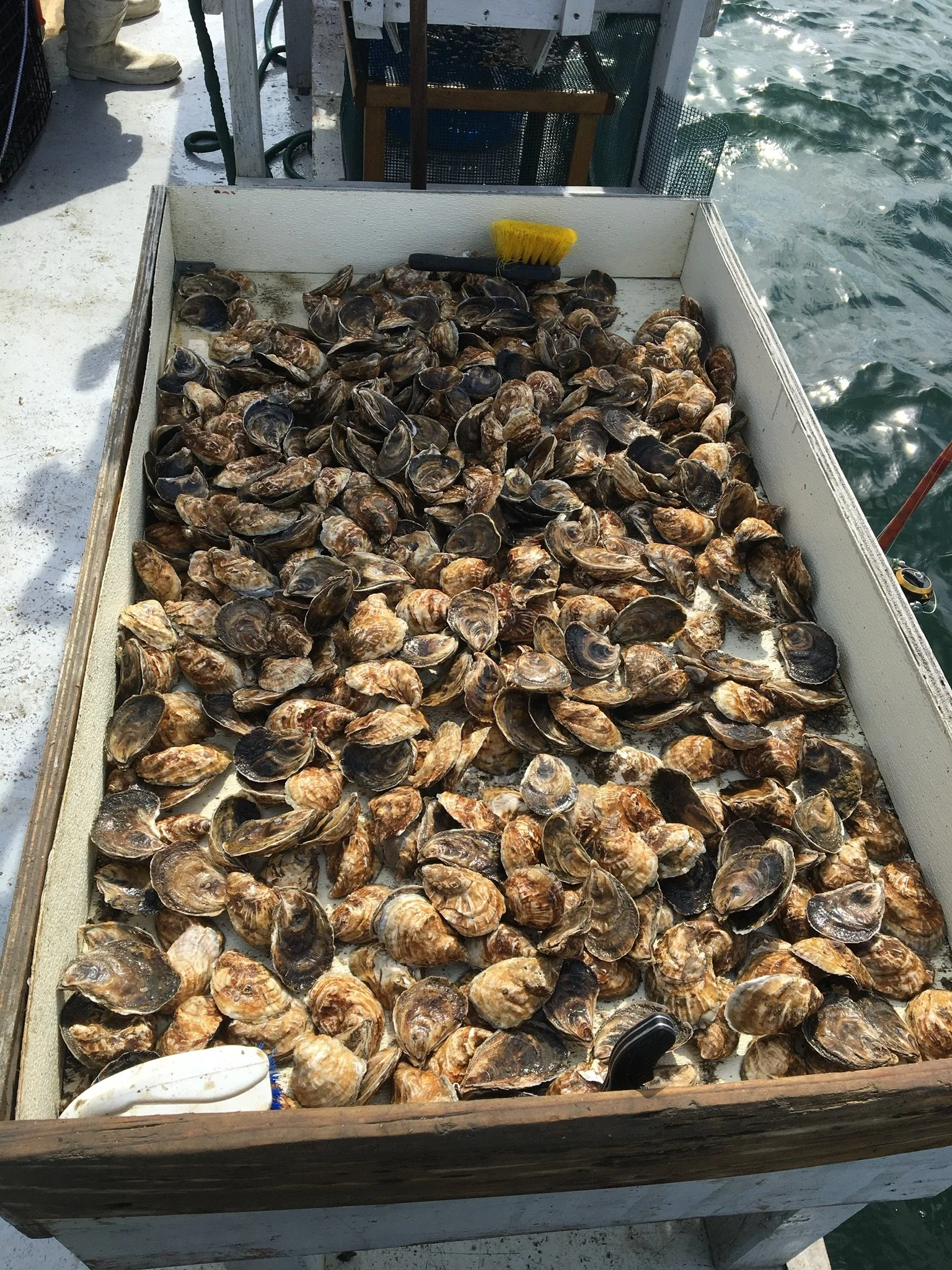
A culling tray of freshly harvested Long Island oysters on the boat
Here are five recipes built around Long Island oysters. Use whatever local farm you can find at the market this week, and save the liquor from the shells or the container — it belongs in the pan.
1. Classic Oyster Stuffing
A Northeast Thanksgiving classic. The bread should stay moist in the middle and turn golden on top, and the oysters should remain plump, not tight and rubbery. This version is baked in its own dish, which is easier on the oysters and a better choice than packing them inside the bird.
Yield: 8 to 10 servings as a side
Ingredients
- 1 loaf (about 1 pound) day-old country bread or sourdough, cut into ¾-inch cubes (about 10 cups)
- 12 tablespoons (1½ sticks) unsalted butter, plus more for the dish
- 2 medium onions, diced
- 4 celery stalks, diced
- 2 tablespoons chopped fresh sage
- 2 teaspoons fresh thyme leaves (or 1 teaspoon dried)
- ½ cup chopped fresh parsley
- 1 pint shucked Long Island oysters (about 16 to 24, depending on size), drained, liquor reserved
- 1½ to 2 cups turkey or chicken stock
- 2 large eggs, beaten
- Kosher salt and freshly ground black pepper
- Pinch of cayenne (optional)
Steps
- Heat the oven to 350°F. Spread the bread cubes on a sheet pan and toast for 12 to 15 minutes, until dry and barely golden. Butter a 9-by-13-inch or similar 3-quart baking dish.
- Melt the butter in a wide skillet over medium heat. Add the onions and celery and cook, stirring, until soft and translucent, 8 to 10 minutes. Stir in the sage and thyme and cook for 1 minute more.
- In a large bowl, combine the toasted bread, the onion mixture, and the parsley. Season generously with salt and pepper, and the cayenne if you like it.
- Whisk together 1½ cups of the stock, the reserved oyster liquor, and the eggs. Pour over the bread and toss until evenly moistened. If the mixture still looks dry, add a little more stock. It should feel damp, not soupy. Cut any large oysters in half, then fold them in gently.
- Turn the stuffing into the baking dish. Cover with foil and bake for 30 minutes. Uncover and bake another 15 to 20 minutes, until the top is golden and the center is hot.
Tip: Fold the oysters in at the last moment, just before the stuffing goes into the oven. If they sit too long in the raw mix, or if the stuffing bakes until the bread is dry, they tighten up.
2. Oyster and Leek Chowder
A quiet first course that does not compete with the rest of the meal. The leeks go sweet in butter; the oysters go in at the very end.
Yield: 4 to 6 as a starter
Ingredients
- 4 tablespoons unsalted butter
- 3 large leeks, white and light green parts only, halved lengthwise, rinsed well, and thinly sliced
- 1 celery stalk, diced
- 1 pound Yukon Gold potatoes, peeled and cut into ½-inch cubes
- 1 bay leaf
- 2 sprigs fresh thyme
- Reserved oyster liquor, plus enough chicken or seafood stock to make 3 cups total liquid
- 2 cups whole milk
- 1 cup heavy cream
- 1 pint shucked Long Island oysters, liquor reserved
- Kosher salt and freshly ground black or white pepper
- Chopped chives and a squeeze of lemon, for serving
Steps
- Melt the butter in a heavy pot over medium heat. Add the leeks and celery and cook gently, stirring often, until soft but not browned, about 10 minutes.
- Add the potatoes, bay leaf, thyme, oyster liquor, and stock. Bring to a simmer and cook until the potatoes are just tender, 12 to 15 minutes.
- Stir in the milk and cream and warm to a gentle simmer. Do not let the chowder boil hard, or the dairy can break.
- Season with salt and pepper. Add the oysters and cook 2 to 4 minutes, just until the edges begin to curl. Discard the bay leaf and thyme stems. Taste again, then ladle into warm bowls and finish with chives and a little lemon.
Tip: The oysters are done as soon as the edges curl. Leave them on the heat much longer and they turn tough. If you need to hold the chowder, keep it warm without the oysters and stir them in just before you serve.
3. Raw Bar with Cranberry Mignonette
The easiest way to start the meal, and the one that shows off a good Long Island oyster most clearly. The mignonette is a Thanksgiving nod: sharp, a little tart, and barely sweet from the cranberry and orange zest.
Yield: 24 oysters, enough for 4 to 6 as a starter
Ingredients
- 24 Long Island oysters, scrubbed
- ½ cup champagne vinegar or white wine vinegar
- 1 small shallot, very finely minced
- ⅓ cup fresh cranberries, very finely chopped
- ½ teaspoon sugar
- 1 teaspoon finely grated orange zest
- ½ teaspoon freshly cracked black pepper
- Pinch of kosher salt
- Crushed ice and lemon wedges, for serving
Steps
- Stir together the vinegar, shallot, cranberries, sugar, orange zest, pepper, and salt. Taste and adjust the salt or sugar so the sauce is bright, not candy-sweet. Let it sit for at least 30 minutes, or up to a few hours in the refrigerator, so the shallot and cranberry soften into the vinegar.
- Just before serving, shuck the oysters and arrange them on a bed of crushed ice, taking care to keep the liquor in each shell.
- Spoon a little mignonette over each oyster, or pass the sauce at the table with lemon wedges.
Tip: Make the mignonette ahead, even the night before. Keep the oysters unopened and on ice until guests are walking in, then shuck them at the last minute so they stay cold and the liquor does not spill.
4. Broiled Oysters with Herb-Bacon Butter
Hot, bubbling, and gone in a minute. These work as a passed appetizer or as a second plate after the raw bar, if you want both. The bacon is optional; the herb butter is good on its own.
Yield: 18 to 24 oysters, enough for 6 as an appetizer
Ingredients
- 18 to 24 Long Island oysters, scrubbed
- 8 tablespoons (1 stick) unsalted butter, softened
- 2 slices bacon, cooked until crisp and finely chopped (optional, but very good)
- 2 tablespoons chopped fresh parsley
- 1 tablespoon chopped fresh chives
- 1 small garlic clove, minced, or 1 tablespoon minced shallot
- 1 teaspoon finely grated lemon zest
- 1 teaspoon lemon juice
- Freshly ground black pepper
- Pinch of cayenne
- Coarse salt or crumpled foil, for the pan
Steps
- Heat the broiler, with a rack about 4 to 6 inches from the element. Mix the butter with the bacon, parsley, chives, garlic or shallot, lemon zest, lemon juice, pepper, and cayenne.
- Shuck the oysters, leaving them on the half shell with their liquor. Set the shells in a bed of coarse salt, or on a sheet of crumpled foil, so they sit level and the butter does not run off.
- Put a small knob of the herb butter on each oyster, just enough to cover the meat.
- Broil for 4 to 6 minutes, until the butter is bubbling and the edges of the oysters are just set. Serve right away, with the pan juices spooned back over the shells.
Tip: The salt bed is worth the extra minute of setup. It keeps the shells from tipping and burning the butter on the pan. And do not walk away from the broiler; these go from perfect to overcooked quickly.
5. Crispy Fried Oysters
A simple appetizer to put out with drinks while the turkey rests. The coating is just flour, cornmeal, and a little spice — enough crunch to contrast the soft oyster inside.
Yield: About 18 oysters, enough for 4 to 6 as an appetizer
Ingredients
- 1 pint shucked Long Island oysters, drained and patted dry (save the liquor for stuffing or chowder)
- ½ cup all-purpose flour
- ½ cup fine cornmeal
- 1 teaspoon kosher salt
- ½ teaspoon paprika
- ¼ teaspoon freshly ground black pepper
- Pinch of cayenne
- Neutral oil, such as peanut or canola, for frying
- Lemon wedges, for serving
- Optional sauce: ½ cup mayonnaise mixed with 1 tablespoon lemon juice, a few dashes of hot sauce, and chopped chives
Steps
- In a shallow bowl, mix the flour, cornmeal, salt, paprika, pepper, and cayenne.
- Pour about 1 inch of oil into a heavy skillet and heat to 350–365°F. A cube of bread should brown in about a minute.
- Dredge the oysters in the flour mixture, shaking off the excess, and add them to the oil in batches. Do not crowd the pan. Fry until golden, about 1 to 2 minutes per side.
- Lift them onto a rack or paper towels. Sprinkle with a pinch of salt and serve immediately with lemon and the sauce, if you are using it.
Tip: Pat the oysters dry and dredge them only when the oil is ready. A wet oyster makes the coating pasty, and a crowded pan drops the oil temperature so they turn greasy instead of crisp.
How to Buy and Shuck Long Island Oysters
Buy from a local farm stand, a fish market, or a grocery counter that can tell you the farm name. Live oysters should feel heavy for their size and smell like clean seawater, nothing more.
Keep them cold. Store them in the refrigerator, cup side down, under a damp cloth or in a loosely covered tray on ice. Do not seal them in a plastic bag, and do not let them sit in melted ice water.
Before you cook or serve them, check each one. A live oyster is tightly closed, or it will close when you tap the shell. Discard any that stay open, any with cracked shells, and any that smell off.
To shuck, use a sturdy oyster knife and a thick towel or a cut-resistant glove. Hold the oyster firmly, cup side down, with the hinge facing you. Work the tip of the knife into the hinge, then twist to pop the shell. Slide the knife along the inside of the top shell to cut the muscle, lift the top off, then sweep under the oyster to free it, keeping as much liquor in the cup as you can. If you are new to this, ask the fishmonger to show you once — it gets easier after a half dozen.
Bring Long Island Oysters to the Table
If you can, buy from a Long Island grower this week, or ask for Long Island oysters by name at the market and at restaurants. That purchase supports the farms working our bays, and it puts a local harvest on a holiday table that has always had room for it.
For more about the growers and the waters they farm, visit liogany.org.